The Garden of Ridvan in Akko: How a Prisoner's Retreat Became the Holiest Bahá'í Site in Israel
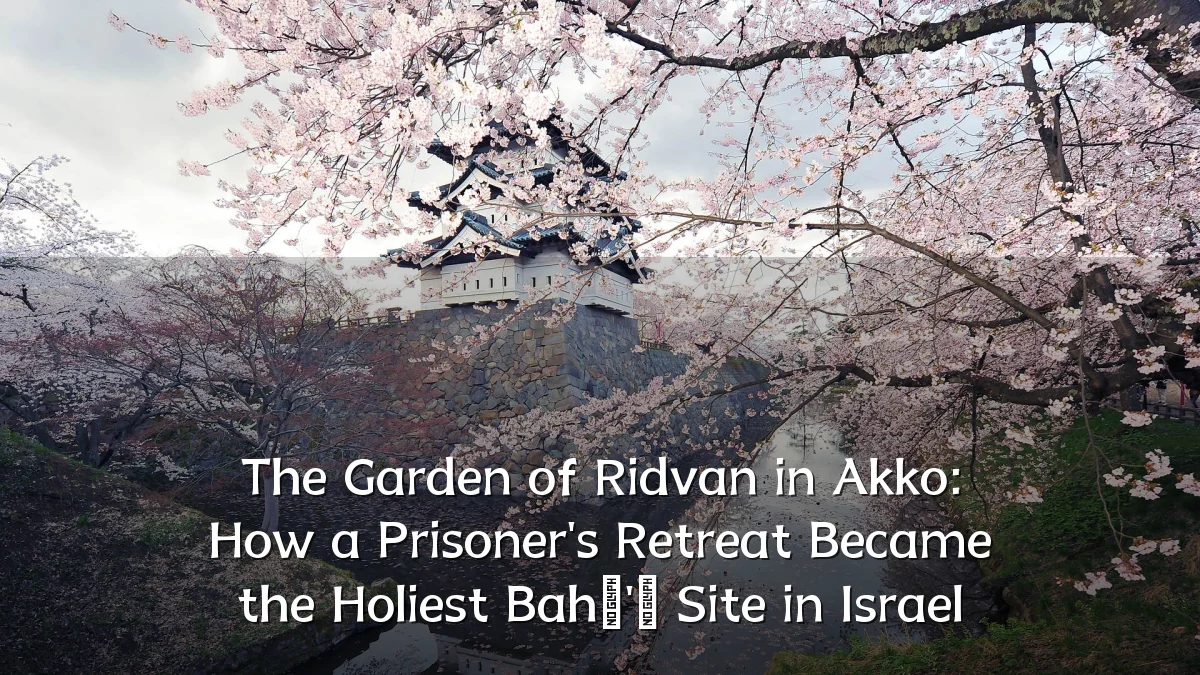
On the edge of Akko's old city, a walled garden sits in quiet contrast to the Ottoman fortress that defined the town for so long. For Bahá'ís around the world, the Garden of Ridvan is a site of deep spiritual meaning, tied directly to the life of Bahá'u'lláh and the years of hardship and endurance that shaped the faith. Now recognized among the most sacred Bahá'í places in Israel, the garden is drawing renewed attention from pilgrims, conservationists, and tourists.
Recent Trends
Interest in the Bahá'í gardens in northern Israel has grown steadily in the years since the pandemic's travel disruptions eased. The garden in Akko is increasingly being positioned within the broader Bahá'í pilgrimage circuit that already includes the terraced gardens on Mount Carmel in Haifa and the Shrine of Bahá'u'lláh at Bahjí, just north of Akko. This has brought a new, more diverse flow of visitors to a site that has historically been known mainly to Bahá'ís and dedicated scholars of the Faith.

- A visible uptick in guided tours that combine Akko's prison and citadel attractions with the garden itself.
- Greater digital visibility; short-form videos and trip-planning platforms now regularly feature the garden's unusual history.
- A shift toward softer, heritage-oriented tourism in Israel's northern coastal towns.
Background
Bahá'u'lláh, the founder of the Bahá'í Faith, was exiled to the Akko prison citadel in the late 1860s. He and a small group of followers endured severe confinement in the fortress before conditions gradually eased. After several years, Bahá'u'lláh was permitted to move into houses within the city, though he remained officially a prisoner.

It was during this period that a walled garden on the outskirts of Akko became a refuge. Rent, along with the surrounding area, it offered shade and privacy, and Bahá'u'lláh named it Ridvan, invoking the garden of the same name in Baghdad where he had publicly declared his mission years earlier. In Akko, the garden served as a place of retreat, contemplation, and meetings with visitors. For the Bahá'í community, it represents the transformation of a prisoner's bitter circumstances into a site of renewal and reflection.
Today, the garden is maintained by the Bahá'í International Community and forms part of the group of Bahá'í holy places that were inscribed as a UNESCO World Heritage site in 2008, a status that covers locations in both Haifa and western Galilee.
User Concerns
Visitors considering a stop at the Garden of Ridvan often find that the site is smaller and more understated than the dramatic terraced gardens in Haifa. Practical questions, rather than theological ones, tend to dominate pre-visit discussions online.
- Access: The garden is generally open to the public during set hours, but entry can be restricted on Bahá'í holy days or during conservation work. Checking the official schedule in advance is recommended.
- Dress code: Modest clothing is expected, consistent with norms at most religious sites throughout Israel.
- Photography: Outdoor photography is usually permitted, while prayer spaces and interior structures may be off-limits to cameras.
- Wayfinding: The garden lies within Akko's dense urban fabric and can be easy to miss; visitors often report needing a GPS or a local guide to locate the entrance.
- Physical accessibility: Historic paving and paths may pose challenges for those with limited mobility, and the garden may not be fully wheelchair accessible.
Likely Impact
The garden's elevated status continues to shape planning decisions in Akko. Local officials and tour operators view the site as an anchor for cultural tourism, which brings economic benefits to nearby businesses. Yet there is also a recognized need to balance visitor flow with the quiet integrity of a functioning place of pilgrimage.
From a conservation standpoint, the UNESCO designation has raised expectations for building maintenance, landscaping, and preservation of the garden's historical character. This is likely to require steady investment and coordinated management between the Bahá'í administration and municipal authorities.
The site also plays a role in interfaith understanding. For visitors who are not Bahá'í, the garden offers a grounded way to connect with the Faith's modern history, and a chance to see how a site of imprisonment was reimagined as a place of peace.
What to Watch Next
Several factors are likely to determine how the Garden of Ridvan evolves in the coming years.
- Visitor management: As numbers rise, pre-booking or timed entry may be introduced to protect the site's calm atmosphere.
- Restoration work: Continued maintenance of the garden's walls, pathways, and greenery will be necessary, especially as historical features require specialist care.
- Local integration: Akko's ongoing efforts to improve signage, infrastructure, and tour routes could make the garden easier to reach and more prominent in the city's cultural narrative.
- Climate pressure: The garden's mature trees and irrigation systems will need ongoing attention as regional temperatures and water availability shift.
For now, the Garden of Ridvan remains a distinctive chapter in Israel's religious and cultural landscape: a place born from confinement, honored today as one of the Bahá'í Faith's most sacred sites, and slowly finding its place on a broader tourist map.